
Blog | What Are V Levels? Understanding the UK’s Latest Education Pathway
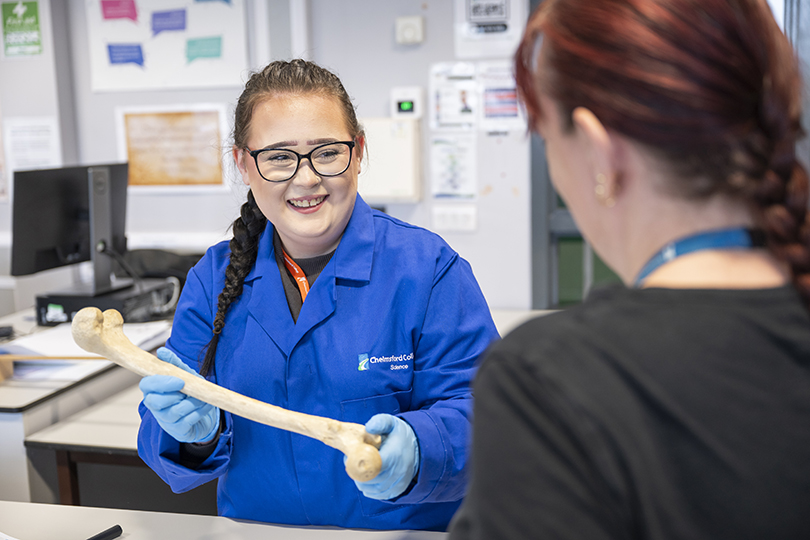
In 2027, the UK education system is set to undergo one of its most significant transformations in decades, with the introduction of V Levels, a new qualification designed to simplify post-16 education and strengthen vocational routes into skilled employment. Building on lessons learned from T Levels and the long-standing A Level framework, V Levels aim to create a unified, high-quality pathway that bridges academic study and practical skills.
This article explores what V Levels are, why they’re being introduced, how they’ll work, and what they mean for students, educators, and employers across the country.
The Background: Why the UK Is Reforming Post-16 Education
The UK’s post-16 education landscape has long been criticised for being overly complex. Students currently face a confusing array of options: A Levels, T Levels, BTECs, apprenticeships, and more. While this diversity offers flexibility, it can also lead to inconsistency in standards, unclear routes to employment, and unequal recognition by universities and employers.
In 2025, the Department for Education (DfE) announced that this would change. By 2027, the government plans to phase out many existing vocational qualifications, including BTECs and some T Levels, replacing them with a new framework called V Levels (Vocational Levels). The goal is to simplify the system so that every qualification clearly prepares students either for university, skilled employment, or higher technical study.
What Are V Levels?
V Levels (short for Vocational Levels) will be post-16 qualifications designed to blend the academic depth of A Levels with the hands-on experience of technical education. They’ll form a central part of the new Advanced British Standard (ABS), an overarching qualification framework that combines academic and technical learning into one coherent system.
Each V Level will focus on a specific career area, such as healthcare, digital technology, engineering, or business, and will be developed in partnership with employers to ensure the curriculum reflects real industry needs.
Students typically study three V Levels or a combination of V Levels and academic subjects over two years, similar to the current A Level model. The difference lies in how they are taught: alongside classroom learning, students will complete industry placements, practical assessments, and project-based tasks that simulate real-world challenges.
How V Levels Differ from A Levels and T Levels
The UK’s existing qualifications, A Levels and T Levels, serve different purposes. A Levels are purely academic and focus on theoretical knowledge, while T Levels, introduced in 2020, are more practical and include 45 days of work experience. However, uptake for T Levels has been mixed, with limited subject availability and uneven employer engagement.
V Levels aim to combine the best of both.
| Qualification | Focus | Duration | Typical Pathway |
|---|---|---|---|
| A Level | Academic and exam-based | 2 Years | University entry |
| T Level | Technical with work placement | 2 Years | Skilled employment or higher apprenticeships |
| V Level | Balanced academic and vocational learning | 2 Years | University, higher technical study, higher or degree apprenticeships, or employment |
Unlike T Levels, which often focus on a single career area, V Levels are designed to be broader and more flexible, making them more comparable to A Levels in terms of structure and accessibility. Students could, for example, study a V Level in “Health and Science” alongside one in “Digital Skills,” giving them both a technical foundation and academic breadth.
Why Are V Levels Being Introduced?
The government’s motivation for introducing V Levels is twofold: simplification and skills alignment.
1) Simplifying the system
With over 12,000 vocational qualifications available in the UK, the post-16 landscape has become overly fragmented. Employers, universities, and even students often struggle to understand the relative value of each. V Levels are intended to replace this patchwork with a smaller, more coherent set of qualifications that carry clear meaning and national recognition.
2) Meeting employer needs
Many industries face severe skills shortages, particularly in sectors such as construction, digital technology, and healthcare. V Levels are being designed with direct input from employers to ensure that students gain the specific technical, digital, and interpersonal skills that the modern workforce demands.
3) Creating parity between academic and vocational routes
Historically, vocational education in the UK has been viewed as “second best” to academic study. V Levels aim to change this perception by placing vocational learning on an equal footing with A Levels, both in rigour and prestige.
What Will V Levels Include?
While the full details are still being developed, early guidance suggests that V Levels will include the following components:
• Core knowledge and theory: Students will study key concepts within their chosen field, such as anatomy in health or coding principles in digital technology.
• Applied learning: Each V Level will include substantial hands-on elements, from lab experiments to industry projects.
• Work placements: Every student will complete meaningful industry experience, helping them apply classroom knowledge to real-life settings.
• Assessment mix: V Levels will balance exams, coursework, and employer-verified projects rather than relying on a single testing method.
Benefits of V Levels
1. Greater flexibility and choice
Students will be able to combine V Levels across disciplines, building a tailored pathway that reflects their interests and career goals.
2. Stronger employer partnerships
By embedding employer collaboration into qualification design, V Levels will ensure students graduate with the skills businesses actually need.
3. Increased prestige for vocational learning
By aligning with the Advanced British Standard, V Levels will finally give vocational education equal status to academic study.
4. Clearer progression routes
V Levels will be designed to feed directly into higher technical qualifications, higher or degree apprenticeships, or university degrees, offering multiple progression options rather than a single, narrow route.
Risks and Challenges
Despite the promise of V Levels, several experts have raised valid concerns:
• Implementation timeline: Launching nationwide by 2027 is ambitious. Colleges, employers, and exam boards will need significant time and resources to adapt.
• Access and awareness: Many schools may initially lack the facilities or partnerships needed to deliver V Levels effectively.
• Equity and inclusion: Critics worry that vocational routes could still be seen as “second-class” if not promoted equally across all demographics.
• Disruption to existing qualifications: The phase-out of BTECs and some T Levels could leave transitional gaps for students currently enrolled in those programs.
The Future of Post-16 Education in the UK
The introduction of V Levels signals a broader shift toward a skills-based economy, one where education is closely tied to employability and lifelong learning. Alongside the Advanced British Standard, V Levels will play a central role in reshaping how the UK prepares young people for the future workforce.
For employers, it’s an opportunity to influence how skills are developed from the ground up. For students, it means greater clarity and opportunity. And for educators, it presents both a challenge and an invitation to reimagine how practical and academic learning can coexist.
In Summary
V Levels represent an ambitious new chapter in UK education, one that aims to merge academic excellence with technical skill. By 2027, they could redefine how post-16 learning is structured, valued, and delivered nationwide.
While challenges remain, the vision is clear: a simpler, fairer, and more relevant qualification system that empowers students to succeed in both university lecture halls and real-world workplaces.
This article is based on the latest government updates on the introduction of V Levels and will be revised regularly as more details emerge ahead of their proposed 2027 launch.